Discovering the
Fascinating Evolution
of Dogs
|
|
Please Help Homeless Pets with a donation of one dollar
Dogs and their Evolution from early history until
now.
By: Tippy & Turbo
It has been a well-debated but generally accepted fact that
the dog of today originated from the wolf (canis lupus).
Recently, DNA scientific lab results have linked the grey
wolf canis lupus and the common dog which was formerly known
as canis familiaris. Since this evidence was submitted to
the leading scientific authorities, canis familiaris is now
classified as canis lupus.
There are several common factors that humans share with
wolves and that is probably why wolves were domesticated.
For example: humans and wolves are pack animals. Wolves and
humans hunt prey animals. Both humans and wolves have a
strong sense of family and family structure.
Eventually at some point in history the wolf would have
become domesticated by humans just because humans and wolves
would have crossed paths while hunting so many times.
Who adopted whom may be up for debate but it is suspected
that abandoned or lost wolf cubs may have been adopted by
humans to be used as companions and hunting partners. The
actual time period when this may have happened is actually
unknown but it is a fact that the wolf was probably one of
the first domesticated animals.
These first domesticated wolves probably would not have been
excellent companion dogs as wolves are not good pets. They
are hunters and pack animals with definite wild streaks. The
wolf would primarily have been used to hunt with and to
guard the camp, not as a playmate or helper in the sense of
guarding the flocks.
Unlike a lot of other animals, the wolf or canis lupus has
very plastic genes and by selective breeding you can
eventually change the dominant characteristics and behavior
of a dog family within a few generations. This is why we
have so many different breeds of dog today.
It may take many generations to actually have a true breed
that consistently litters puppies with the characteristics
and behavior that you want, but considering that dogs live
around fifteen years you can actually see this happen within
one human lifetime.
Considering the many varied breeds of dog that are now being
bred and registered as pure breeds the domestication process
must have happened all over the world at one point or
another in history. Whereas the Chinese bred dogs that were
small and with human-looking faces, designed to be pampered
pets, other cultures bred dogs that were large, fast and
sleek hunters.
There are so many varied dog species, all with their own
characteristics and temperaments that you can just about get
any kind of companion dog that you want. There are several
different classes of dogs as well: sporting, hunting,
working, companion, etcetera.
In short, the dog has been a long-time partner to humans.
They help us in innumerable ways and most dog owners would
say that their dog is a family member, not just a pet. If
you are looking for a dog to share your life with then
consider your needs, the space you have and your mobility
and choose the breed carefully.
Do you best to fit your dog to your lifestyle and don't
choose without thought or just because of looks or style and
you will have a long time happy companion. But whatever
breed or mix of breeds you choose, just don't forget that
your best friend is really a wolf!
Wolf
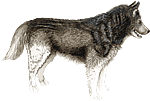
Select
me for more info on the history of wolves to dogs
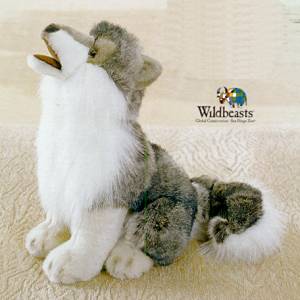
Awesome Stuffed Plush Wolves
(also you can find out more about wolves on that page)
How to Help your Dog
Live a Longer, Healthier Life
|
